ADA Compliant Portable Restrooms: A Practical Summary of Federal Specifications
Anyone who has prepared an outside occasion, handled a short-lived website, or coordinated public gain access to on a busy residential property has actually run into the very same practical question: what counts as an ADA compliant mobile toilet, and what does the legislation in fact require?
That concern seems straightforward till you are the one choosing devices, putting them on irregular ground, or trying to make a final adjustment prior to visitors show up. In technique, ease of access is not practically ordering a bigger stall and calling it great. Federal standards consider the restroom system itself, how individuals reach it, how they enter it, and whether it is functional in an actual, daily sense by people with disabilities.
For portable restroom rentals in the USA, the regulating government framework comes from the 2010 ADA Standards for Accessible Layout, as interpreted by the Division of Justice and the U.S. Gain Access To Board. Those criteria matter because mobile systems are commonly utilized in settings where long-term washrooms are inaccessible or as well away. A celebration, a short-term public celebration, a pop-up workspace, or a short-term procedures site still needs to represent access. The momentary nature of the washroom does not make access optional.
Where the government guideline starts
The initial thing to comprehend is that portable restrooms are not outside the ADA even if they are momentary. That is just one of the most common misunderstandings I see in real-world planning discussions. People usually presume that if an occasion lasts only a day or two, or if the devices are rented out rather than constructed into a framework, the typical accessibility assumptions somehow soften. They do not.
Federal ease of access standards apply to portable commode services, and the scoping regulation for clusters of single-user mobile commode devices is especially important. When portable toilets are given in a team, at the very least 5 percent of the units in each cluster should come. The Access Board has explained that this uses also at short-lived events.
That 5 percent figure seems straightforward, however it affects preparing earlier than many people recognize. If you wait till the delivery van is scheduled to think of access, you may find that the easily accessible device was not reserved, the site can not accommodate it appropriately, or the amount got leaves no area to meet the minimum ratio. Ease of access has a tendency to go more efficiently when it is taken care of at the same time as the initial washroom matter, not as a different add-on.
This is likewise where language can get sloppy in the marketplace. You might hear people request for an ada mobile restroom, an ada mobile commode, or an ada handicap accessible mobile restroom. Those expressions prevail in everyday speech, yet the critical concern is not the label in a rental magazine. The inquiry is whether the device and its placement satisfy the government ease of access needs that apply.
What "easily accessible" means in practice
An available mobile bathroom is not specified by dimension alone. A larger impact assists, but federal requirements go better. The system should fulfill suitable toilet-room technical needs, including matters such as clearances, turning space, door steering clearance, and appropriate policies for grab bars and water closet clearances.
Those information matter since they impact whether someone can really get in, position themselves, and use the toilet with dignity and self-reliance. A spacious inside that lacks appropriate maneuvering clearance can still fail. An unit with a hefty or unpleasant door method can still fall short. A stall that technically contains a toilet yet does not provide the needed usable area around it can still fail.
That is why the expression ada certified portable bathroom requirements need to never ever be lowered to an advertising insurance claim. Conformity is a combination of design functions and site conditions. Both matter. An appropriately made accessible unit can become inaccessible if it is set in mud, blocked by aesthetics, or gotten to just by a steep improvised ramp.
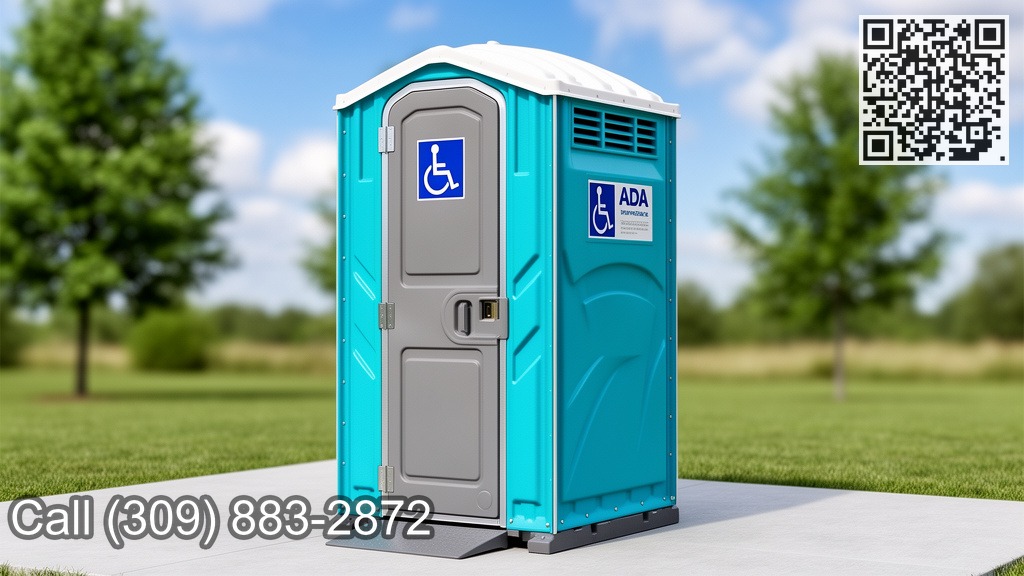
The requirements also need easily accessible mobile bathroom units to be identified with the International Icon of Availability. This is not simply a visual politeness. It aids users find the accessible choice quickly, particularly in large collections where individuals may be scanning from a distance or browsing through crowds.
The course matters as long as the unit
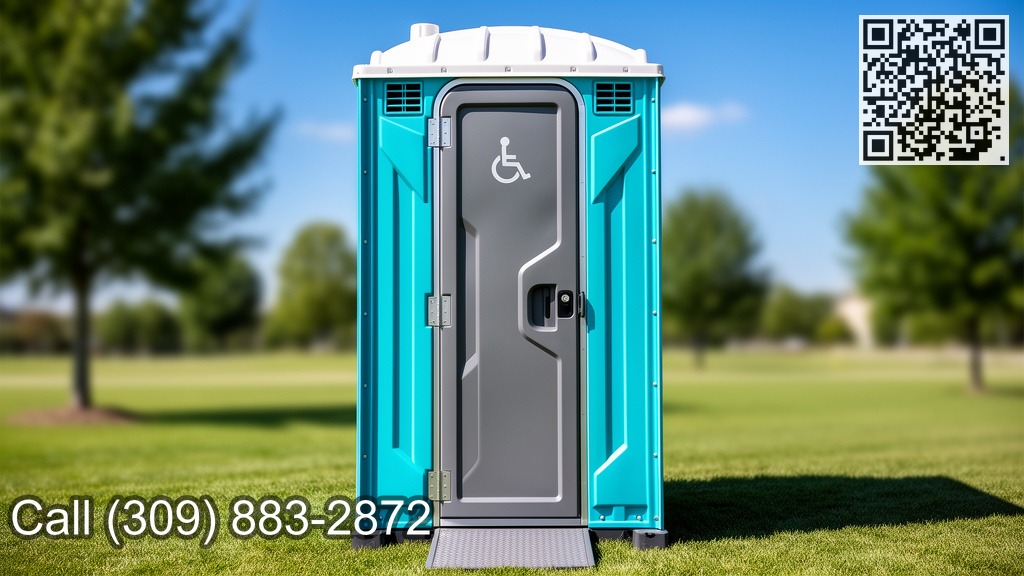
One of the most overlooked parts of compliance is the course bring about the restroom. Federal guidance does not stop at the toilet door. Easily accessible portable units need to have an accessible path and entryway, and any ramps or landings that are needed must adhere to ADA technical requirements.
This is where even well-intentioned website setups can face problem. A distributor may provide a certified device, yet the last positioning is frequently regulated by the event coordinator, basic specialist, building manager, or website superintendent. If the only path requires crossing deep gravel, soft lawn after rainfall, or an abrupt level adjustment with no certified ramp or touchdown, the system might not be meaningfully obtainable even though the tools itself is correct.
I have seen this issue in short-lived configurations where the accessible washroom was placed at the far edge of an area because that is where the truck had space to unload. Theoretically, an ada certified accessible portable restroom had actually been ordered. In practice, a wheelchair customer would have needed assistance simply reaching it. That kind of inequality is specifically why placement ought to never ever be dealt with as a small logistics note.
A great website evaluation asks practical questions before distribution. Can somebody technique the entrance without running into an obstacle? Is the ground stable enough for predictable movement? If a ramp or touchdown is required, has any person validated that it meets the relevant technological criteria rather than functioning as a rough comfort fix? Those concerns conserve humiliation later, and much more significantly, they secure real access.
The 5 percent regulation, and why "collection" matters
The government typical speaks with clusters of portable single-user toilet devices. At least 5 percent in each collection need to come. That expression, each cluster, deserves reducing for since it has genuine operational consequences.
If restrooms are divided throughout a website, availability should not be considered something that can simply be focused in one remote edge. The guideline is tied to each cluster, not to the overall count across a whole home in the abstract. For occasion and website planning, that suggests circulation matters. If people are expected to make use of several unique teams of units, accessibility needs to follow that same logic.
This factor often obtains shed when someone says, "We have one easily accessible unit someplace on site." Often that statement holds true yet not enough. The pertinent federal regulation is not satisfied by unclear schedule if the cluster-based demand is not met.
For planners, the more secure practice is to map bathroom locations initially, determine where the real clusters are, and afterwards calculate the obtainable units for each and every collection. It is much easier to do this before contracts are wrapped up than to rush after vehicles are rolling.
A short planning check prior to you order
A small amount of advance preparation protects against most portable washroom availability errors. The federal criteria are technological, however the early choice points are not mysterious.
- Count how many single-user mobile units will certainly be in each collection, not just the complete across the entire site.
- Confirm that a minimum of 5 percent of the systems in each cluster will certainly be accessible.
- Plan an obtainable path to the unit, including any type of needed ramp or landing conditions.
- Verify that the accessible unit will certainly be identified with the International Symbol of Accessibility.
- Review positioning conditions on site, because a certified unit can still become pointless with poor location choices.
That list is simple purposefully. It does not replace a legal or layout review, however it captures the planning choices that most often determine whether the last arrangement works.
The construction-site question
Construction settings often produce complication because there is a specific difference in the requirements that people half-remember and then apply too broadly. The older 1991 ADA layout requirements included an exception pertaining to portable commode units at building and construction sites when those devices were made use of specifically by building employees. That exemption has actually led some https://pristineportablesil.com/luxury-portable-restroom-rental/ individuals to assume that all short-lived bathroom configurations at task sites are exempt from accessibility needs. That is as well wide and can be a costly misunderstanding.
The key point is the narrowness of the distinction. The exemption referenced in the confirmed context puts on construction-site mobile toilet systems made use of specifically by building and construction workers under the pointed out 1991 requirement. It does not remove the wider accessibility demands that apply to general mobile commode leasings. As soon as a portable toilet configuration serves the public, visitors, or various other customers outside that restricted exclusive-construction-personnel circumstance, the ease of access evaluation changes.
That distinction matters on mixed-use websites. A redevelopment task might have portable systems behind fence for staff usage only, while also keeping public-facing short-lived facilities for customers, locals, or site visitors close by. Treating those as the same category is high-risk. The details of usage matter.
This is one factor skilled website managers different inner presumptions from public-facing responsibilities. If there is any kind of possibility a device is meant for public gain access to, public programs, or visitor use, it is wise to review it under the applicable federal ease of access requirements as opposed to counting on hearsay about a construction exception.
Why labels from suppliers are not enough
The rental market utilizes a great deal of shorthand. You will certainly see phrases such as ada certified mobile toilets, ada-compliant portable washrooms, ada compliant mobile commode, and ada-compliant mobile commode in sales brochures, on the internet supply pages, and quote sheets. Those labels can be useful for starting the discussion, but they must not end it.
A supplier may correctly identify a system developed for availability, but conformity is not simply an item group. It is an item plus deployment inquiry. If the path is hard to reach, if the cluster matter is taken care of incorrectly, or if the device lacks the called for identification, the arrangement can still fall short.
This is where knowledgeable coordinators tend to ask more sharp inquiries. Not "Do you have an ADA device?" but "How will the accessible unit be determined?" "What site problems does it require?" "Can our selected place support an obtainable entryway?" "How should we think about numerous collections?" Those inquiries produce far better results than counting on a magazine label.
For people looking online, terms like ada portable commode leasing or ada compliant portable bathrooms are useful search language, however they ought to result in an in-depth discussion, not a box-checking exercise.
Temporary events are not a loophole
The Access Board's analysis that the 5 percent accessible-unit rule uses even at temporary occasions is one of the most crucial points in this whole subject. It removes a really common presumption that pop-up or short-duration events operate under looser expectations.
From a sensible standpoint, momentary occasions can be tougher to solve than long-term centers. Ground conditions change by the hour. Foot web traffic is uncertain. Setup teams are scooting. Routes that appear workable in the morning can come to be tough by midafternoon if turf turns soft or crowd-control devices blocks an approach.
That is why short-lived event ease of access needs a person to own the information. If nobody is plainly accountable, the obtainable route is often the very first point to weaken. An unit might be supplied appropriately, significant appropriately, and counted properly, yet then ringed with temporary barricades, parked next to a solution path, or stranded on surface that no longer functions well.
I have actually seen event teams treat accessibility as a getting line thing when it really needs to be an operations issue too. An easily accessible portable bathroom has to stay obtainable after shipment, with real event problems, not simply throughout the website map phase.
Common failure points that do not look noticeable at first
Most ease of access errors with portable bathrooms are not remarkable. They are average oversights that pile up.
One constant problem is dealing with the accessible unit as compatible with common devices when layout adjustments occur late. The larger system typically needs more careful positioning, and moving it casually can compromise the course or entryway. An additional issue is dividing the obtainable system as well far from the rest of the collection in the name of ease for delivery or maintenance. That can produce a set apart individual experience and may not straighten with just how the collection rule operates in practice.
A third issue is assuming firm ground without inspecting just how the website acts under weather condition and web traffic. A path that works on completely dry configuration day might end up being hard after rainfall or after hundreds of individuals go across the location. Portable bathroom preparation often tends to go much better when groups ask not just "Will this operate at 8 a.m.?" but also "Will this still work halfway with the event?"
There is additionally the issue of signage and exposure. The International Icon of Accessibility is called for, and it helps greater than some organizers appreciate. At crowded websites, people choose rapidly. Clear recognition lowers confusion, particularly when assistants, volunteers, or team are not close-by to direct people.
Compliance resides in a larger enforcement environment
Accessibility planning for mobile washrooms does not occur alone. A wider conformity environment has been developing across sectors, and that matters even when the particular topic is a short-lived bathroom rental.
A current instance is the Division of Justice guidance from April 2026 prolonging the deadline for sure state and local government web and mobile access rules to April 26, 2027 for bigger entities. That advice has to do with digital availability, not mobile bathrooms. Still, it indicates something crucial: ADA compliance continues to be an energetic enforcement and policy area. Organizations needs to not presume access responsibilities are fading into the background. If anything, the contrary is true.
For public firms, occasion operators, and companies that offer the public, this more comprehensive environment needs to encourage a more self-displined method. Accessibility is best taken care of as a routine preparation criterion, not as an afterthought triggered only by complaint.
How to speak to your rental provider and your site team
An effective discussion regarding an ada available portable toilet normally includes two groups at the same time: the rental company and individuals controlling the site. If those conversations take place individually, voids appear. The vendor may assume the path is somebody else's responsibility. The site team may assume the unit itself guarantees compliance. Neither presumption is safe.
The best method is to tie the government requirements directly to the website plan. Discuss the number of units in each cluster, the need for easily accessible identification, and the route to the entry before shipment day. If ramps or touchdowns might be required, increase that concern early, due to the fact that those functions are not something to improvise casually on the spot.
Here are the questions that have a tendency to appear the right issues quickly:
- How many portable single-user units will be in each cluster?
- Which devices are planned to serve as the available units for those clusters?
- What is the easily accessible course to every of those systems from the anticipated point of arrival?
- Will any kind of ramp or touchdown be needed, and if so, that is accountable for guaranteeing it complies?
- How will the obtainable devices be noted with the International Sign of Accessibility?
That kind of discussion is not excessive. It is the sensible middle ground between legal abstraction and last-minute scrambling.
The human side of obtaining it right
Standards language can appear technical, however the reason behind it is easy. Individuals require washroom gain access to that is usable, foreseeable, and respectful. When that accessibility is missing, the worry drops on the person that required the center, out the organizer who fell short to think ahead.
That burden shows up in manner ins which are easy to undervalue. A visitor might need to request for aid they did not desire. An employee may need to travel much farther than coworkers for fundamental gain access to. A site visitor may leave an event early due to the fact that the route to the only accessible unit is too hard. These are not abstract damages. They change whether a person can participate fully in work, civic life, recreation, and neighborhood events.
When teams treat ada compliant easily accessible portable bathrooms as component of regular procedures instead of a specific niche holiday accommodation, the end result is typically better for every person. Courses are clearer. Layouts are more thoughtful. Team are less most likely to improvise under stress. Most importantly, individuals come across a website that expected their presence as opposed to reacting to it.
What "functional" truly indicates here
A functional introduction of government criteria should leave space for judgment without wandering right into uncertainty. The tough supports are clear. The controlling government requirements originate from the 2010 ADA Specifications for Accessible Design as interpreted by the DOJ and Gain Access To Board. At the very least 5 percent of single-user portable commode devices in each collection must be accessible, consisting of at short-term events. Obtainable systems have to lug the International Icon of Accessibility. They need to have an available course and entrance, and any required ramps or touchdowns should follow ADA technological needs. The units themselves should satisfy relevant toilet-room technological regulations worrying clearances, transforming space, door maneuvering clearances, and pertinent grab-bar and water storage room clearance requirements.
From there, the useful job is regimented execution. Order the ideal units. Count by collection. Position them where people can really get to them. Protect the route after configuration. Do not rely on marketing language where a real site review is needed. And be careful with the construction-site exemption, since it is narrower than many individuals assume.
That is the heart of ADA planning for portable washrooms. The criteria are government, however the result is neighborhood and prompt, formed by where the unit sits, how the ground behaves, and whether somebody can use it without barriers. When those information are taken care of well, access quits feeling like a technical burden and starts functioning as what it needs to be, ordinary skilled planning.
 Ask ChatGPT
 Ask Grok
 Ask Perplexity
 Ask Claude
 Ask Google AI
 Ask You
Ends · EDUARDOPFME439